
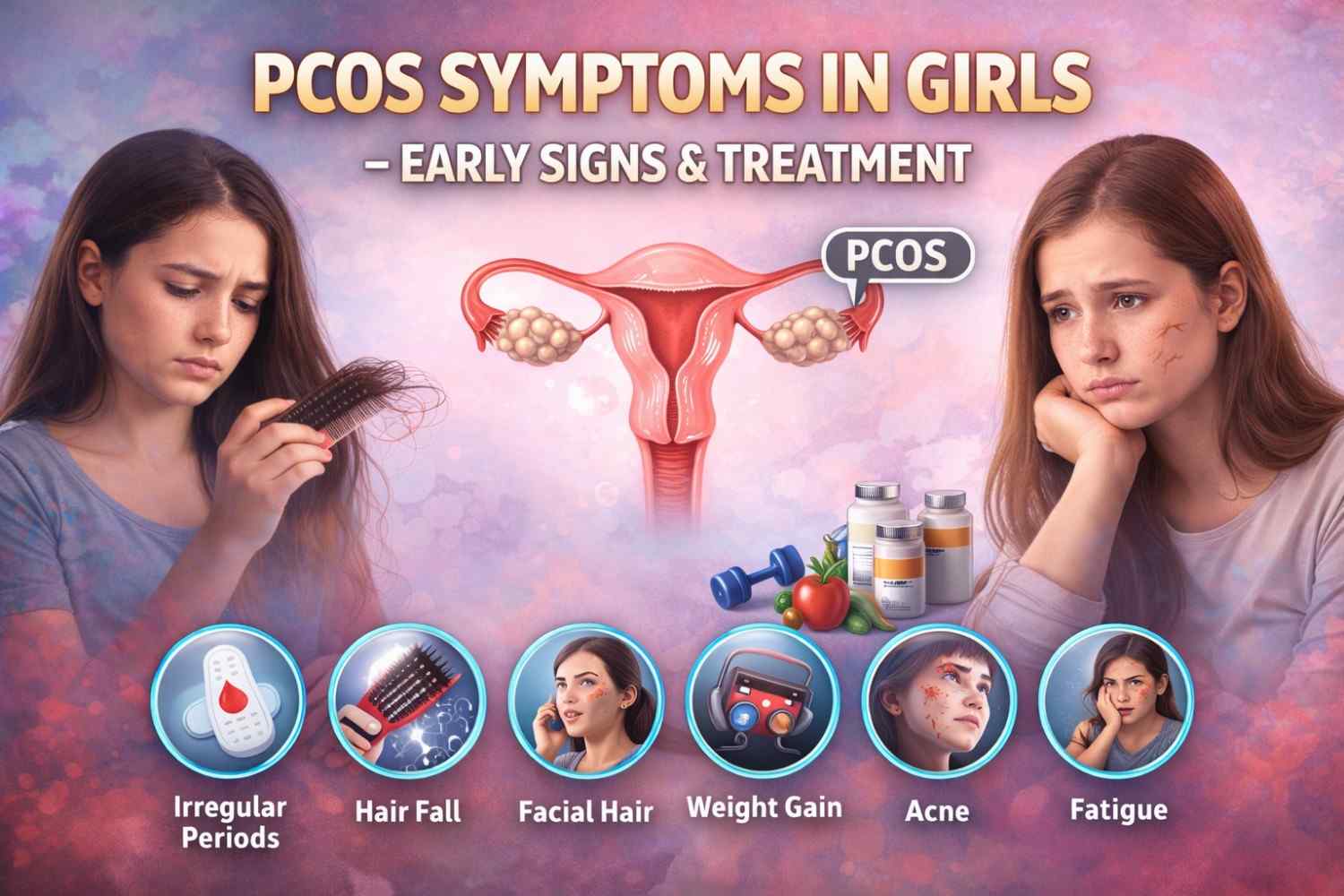
Polycystic Ovary Syndrome, commonly known as PCOS, is one of the most common hormonal disorders affecting teenage girls and young women today. Yet, many girls live with its symptoms for years without realizing what is actually happening inside their bodies. Irregular periods, unwanted hair growth, stubborn acne, and sudden weight gain are often brushed aside as “normal teenage problems,” but in many cases, these can be early signs of PCOS.
Understanding PCOS symptoms in girls is important because early detection can make a big difference. With the right lifestyle changes and medical guidance, most girls with PCOS can manage their symptoms and live healthy, confident lives.
This article explains the common symptoms of PCOS in girls, why it happens, who is at risk, and how it can be managed in a simple and practical way.
What Is PCOS?
PCOS is a hormonal condition where the ovaries produce higher-than-normal levels of androgens (male-type hormones). This hormone imbalance interferes with the normal release of eggs during the menstrual cycle.
In many girls with PCOS, the ovaries may contain multiple small follicles (often called cysts), which is how the condition gets its name. However, not all girls with PCOS have visible cysts.
PCOS is not a single disease but a combination of symptoms that can vary from person to person.
Why PCOS Happens
The exact cause of PCOS is not fully understood, but several factors are believed to play a role:
-
Hormonal imbalance
-
Insulin resistance
-
Genetics (family history)
-
Lifestyle factors such as poor diet and lack of physical activity
These factors can interact and trigger the development of PCOS symptoms in girls.
Common PCOS Symptoms in Girls1. Irregular Periods
One of the earliest and most common PCOS symptoms in girls is irregular menstruation. This may include:
-
Long gaps between periods
-
Very heavy bleeding
-
Very light bleeding
-
Missed periods for months
Irregular periods occur because ovulation does not happen regularly in PCOS.
2. Excess Facial and Body Hair (Hirsutism)
High androgen levels can cause unwanted hair growth on:
-
Upper lip
-
Chin
-
Chest
-
Stomach
-
Back
This can be distressing for many girls and affect self-confidence.
3. Acne and Oily Skin
Persistent acne that does not respond well to normal skincare is another common sign. Breakouts may appear on the face, chest, and back. Skin may also become excessively oily.
4. Weight Gain or Difficulty Losing Weight
Many girls with PCOS gain weight easily, especially around the abdomen. Even with regular dieting, losing weight may feel extremely difficult.
This is often linked to insulin resistance, which is common in PCOS.
5. Thinning Hair or Hair Fall
Some girls experience thinning of scalp hair or increased hair fall. The hair may become finer and less dense over time.
6. Dark Patches of Skin
Dark, thickened patches of skin may appear around the neck, armpits, groin, or under the breasts. This condition is called acanthosis nigricans and is associated with insulin resistance.
7. Mood Changes
Hormonal fluctuations can affect mental health. Girls with PCOS may experience:
-
Mood swings
-
Irritability
-
Anxiety
-
Low self-esteem
These emotional symptoms are just as important as physical ones.
8. Fatigue
Constant tiredness or low energy levels can be present even after proper rest. Hormonal imbalance and blood sugar issues may contribute to this fatigue.
9. Headaches
Some girls report frequent headaches or migraines, which may be linked to hormone changes.
10. Fertility Concerns (Later in Life)
Although not immediately relevant for teenagers, PCOS can affect ovulation, which may make it harder to conceive in adulthood if left unmanaged.
When Should Girls Suspect PCOS?
Girls should consider medical evaluation if they have:
-
Irregular periods for more than two years after starting menstruation
-
Severe acne or excess hair growth
-
Rapid weight gain
-
Family history of PCOS or diabetes
Early consultation can prevent future complications.
How PCOS Is Diagnosed
There is no single test for PCOS. Doctors usually consider:
-
Medical history
-
Menstrual cycle pattern
-
Blood tests for hormones
-
Ultrasound of ovaries
Diagnosis is based on a combination of findings.
Health Risks Associated with PCOS
If untreated, PCOS may increase the risk of:
-
Type 2 diabetes
-
High cholesterol
-
High blood pressure
-
Heart disease
-
Endometrial problems
This is why early management is important.
How PCOS Can Be Managed
PCOS cannot be “cured,” but its symptoms can be effectively controlled.
1. Healthy Diet
-
Eat more fruits, vegetables, whole grains
-
Choose lean proteins
-
Reduce sugary and processed foods
-
Avoid excessive junk food
Balanced meals help regulate blood sugar and hormones.
2. Regular Physical Activity
At least 30 minutes of exercise most days of the week can:
-
Improve insulin sensitivity
-
Help with weight control
-
Reduce stress
Walking, yoga, dancing, or cycling are good options.
3. Weight Management
Even a small weight loss (5–10%) can significantly improve symptoms in overweight girls.
4. Medical Treatment
Doctors may prescribe medications to:
-
Regulate periods
-
Reduce acne and hair growth
-
Improve insulin resistance
Treatment is individualized.
5. Stress Management
Adequate sleep, relaxation techniques, and maintaining a positive routine can improve overall well-being.
Can PCOS Be Prevented?
There is no guaranteed way to prevent PCOS, but maintaining a healthy lifestyle from a young age can lower the risk and reduce severity.
When to See a Doctor
Seek medical advice if:
-
Periods are very irregular
-
Acne or hair growth is severe
-
Weight is increasing rapidly
-
Emotional health is affected
Early support makes management easier.
Final Thoughts
PCOS symptoms in girls are common but often misunderstood. The condition does not define who you are, and it does not mean you cannot live a healthy, fulfilling life.
With awareness, timely medical care, and positive lifestyle choices, PCOS can be managed successfully. The most important step is listening to your body and seeking help when something feels wrong.
Disclaimer: This content is for informational purposes only and should not replace professional medical advice. Always consult a qualified healthcare provider for diagnosis and treatment.