
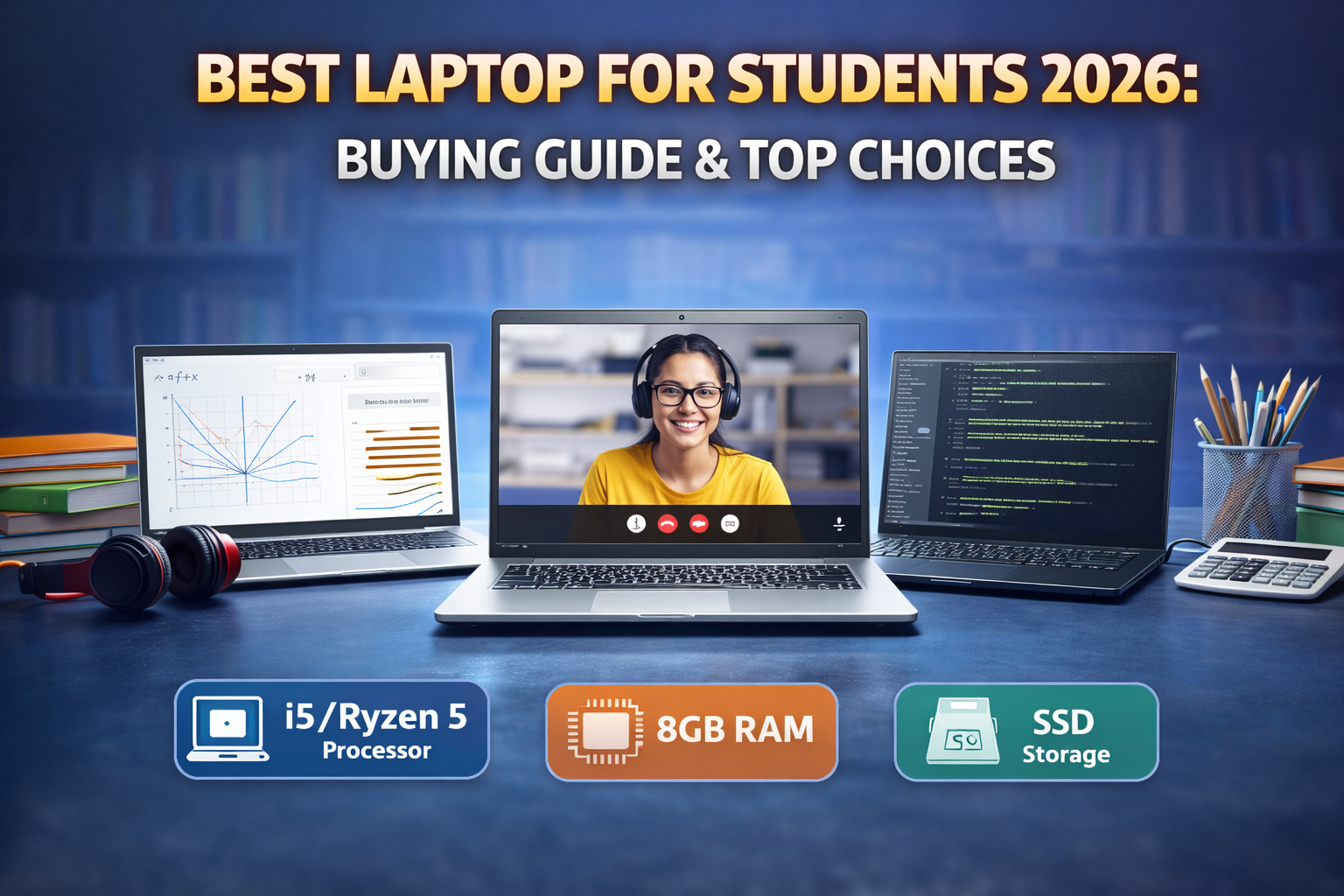
Choosing the best laptop for students is no longer just about picking a cheap computer that can open Word and browse the internet. Today, students attend online classes, create presentations, write assignments, watch recorded lectures, edit photos or videos, code programs, and even play casual games. A laptop has become an everyday learning partner.
From my experience helping students and parents shortlist laptops, the biggest problem isn’t lack of options—it’s too many confusing choices. Processors, RAM, SSD, battery life, graphics, display types… all of this can feel overwhelming.
This guide breaks everything down in simple terms so you can confidently choose the best laptop for students based on real needs, not marketing buzzwords.
Why Students Need a Good Laptop
A good student laptop should:
-
Handle online classes smoothly
-
Run basic software like MS Office, browsers, PDF readers
-
Support assignments, projects, and research
-
Be light enough to carry daily
-
Last several hours on battery
A slow or unreliable laptop wastes time and increases stress. Spending wisely on the right model can make student life much easier.
Key Things to Check Before Buying
Let’s start with the fundamentals. These matter more than brand names.
1. Processor (CPU)
The processor is the brain of the laptop.
Good choices for students:
-
Intel Core i3 / i5
-
AMD Ryzen 3 / Ryzen 5
These processors handle multitasking, browsing, video calls, and office work easily.
Avoid:
-
Very old Intel Pentium or Celeron models (too slow for modern use)
2. RAM (Memory)
RAM affects how many apps you can run smoothly.
-
Minimum: 8GB RAM
-
Ideal: 16GB RAM (if budget allows)
With 8GB, you can attend Zoom classes, use Chrome, and run Office without lag.
3. Storage Type
Always choose SSD (Solid State Drive) over HDD.
-
Minimum: 256GB SSD
-
Better: 512GB SSD
SSDs make laptops boot faster and feel much quicker.
4. Display Size and Quality
-
14-inch or 15.6-inch screen is ideal
-
Full HD (1920×1080) resolution recommended
A sharp screen reduces eye strain during long study hours.
5. Battery Life
Look for laptops that offer at least 6–8 hours of real-world battery life. Students often move between classes, libraries, and home.
6. Weight and Build
Lightweight laptops (1.3–1.7 kg) are easier to carry daily. Sturdy plastic or aluminum builds last longer.
Best Laptop Categories for Students
Different students have different needs. Here are the main categories.
1. Best Budget Laptop for Students
If your main tasks are:
-
Online classes
-
Word, Excel, PowerPoint
-
Web browsing
-
YouTube lectures
Look for:
-
Intel Core i3 or Ryzen 3
-
8GB RAM
-
256GB SSD
These laptops are affordable and reliable for everyday study.
Who should buy:
School students, arts & commerce students, beginners
2. Best Laptop for College Students
College workloads are heavier:
-
Research
-
Presentations
-
Multitasking
-
Sometimes light editing
Recommended specs:
-
Intel Core i5 or Ryzen 5
-
8GB or 16GB RAM
-
512GB SSD
This setup ensures smooth performance for years.
Who should buy:
Engineering, management, science, and commerce students
3. Best Laptop for Coding and Programming Students
Coding needs more processing power and memory.
Recommended:
-
Intel Core i5 / Ryzen 5 or higher
-
16GB RAM
-
SSD storage
If you plan to work with Android Studio, Python, Java, or web development tools, this configuration works well.
Who should buy:
Computer science, IT, and software engineering students
4. Best Laptop for Design and Creative Students
Graphic design, video editing, and animation require stronger hardware.
Recommended:
-
Intel Core i7 / Ryzen 7
-
16GB RAM
-
Dedicated graphics card (optional but helpful)
-
High-quality Full HD or better display
Who should buy:
Graphic design, media, animation, and film students
5. Best Laptop for Students Who Travel Often
If you commute daily or stay in hostel:
-
Lightweight laptop
-
Long battery life
-
Fast charging
Ultrabooks and thin-and-light laptops are perfect here.
Operating System: Windows, macOS, or ChromeOS?
Windows
-
Most popular
-
Works with almost all software
-
Best for general students
macOS (MacBook)
-
Smooth performance
-
Excellent battery life
-
More expensive
Good for students who prefer Apple ecosystem.
ChromeOS (Chromebook)
-
Web-based system
-
Good for browsing and Google Docs
-
Limited offline software support
Best for basic use only.
Recommended Laptop Specifications (Quick Table)
| Use Case | Processor | RAM | Storage |
|---|---|---|---|
| Basic Study | i3 / Ryzen 3 | 8GB | 256GB SSD |
| College Work | i5 / Ryzen 5 | 8–16GB | 512GB SSD |
| Programming | i5 / Ryzen 5+ | 16GB | 512GB SSD |
| Design/Editing | i7 / Ryzen 7 | 16GB+ | 512GB SSD |
Best Laptop Brands for Students
Reliable brands with good service networks:
-
HP
-
Dell
-
Lenovo
-
ASUS
-
Acer
-
Apple
Choose based on specifications and warranty, not only brand name.
Common Mistakes Students Make
1. Buying Too Cheap
Very low-priced laptops often become slow within a year.
2. Ignoring SSD
HDD laptops feel painfully slow today.
3. Choosing Only by Looks
Design is nice, but performance matters more.
4. Buying Without Warranty
Always check warranty and service support.
How Much Should a Student Spend?
General idea:
-
Basic laptop: Low budget
-
Mid-range laptop: Best value
-
High-end laptop: For design & heavy work
Spend according to your actual needs, not trends.
Tips to Make a Laptop Last Longer
-
Keep software updated
-
Use antivirus
-
Clean dust regularly
-
Don’t overload storage
-
Use laptop bag for protection
With care, a good laptop can last 4–6 years.
Best Laptop for Online Classes
Look for:
-
Good webcam (720p or better)
-
Clear microphone
-
Stable Wi-Fi
-
Decent speakers
These improve online learning experience.
New vs Refurbished Laptop
New Laptop
-
Full warranty
-
Latest hardware
-
Safer choice
Refurbished Laptop
-
Cheaper
-
Check seller reputation and warranty
If budget is tight, certified refurbished can be an option.
Is Touchscreen Laptop Good for Students?
Touchscreen laptops are useful for:
-
Digital notes
-
Drawing
-
Presentations
But they cost more and are not necessary for most students.
Should Students Buy Gaming Laptops?
Gaming laptops are powerful but:
-
Heavy
-
Short battery life
-
More expensive
Only buy if you also need graphics power.
Final Thoughts
The best laptop for students is the one that matches your study needs, budget, and future plans. You don’t need the most expensive model, but you should avoid underpowered machines.
For most students, a laptop with:
-
Intel Core i5 / Ryzen 5
-
8–16GB RAM
-
SSD storage
offers the perfect balance of performance and price.
Take time to compare options, read reviews, and choose wisely. A good laptop isn’t just a gadget—it’s an investment in your education.
Disclaimer: This article is for informational purposes only. Specifications and prices may vary by brand and region. Always verify details with official sellers before purchase.