
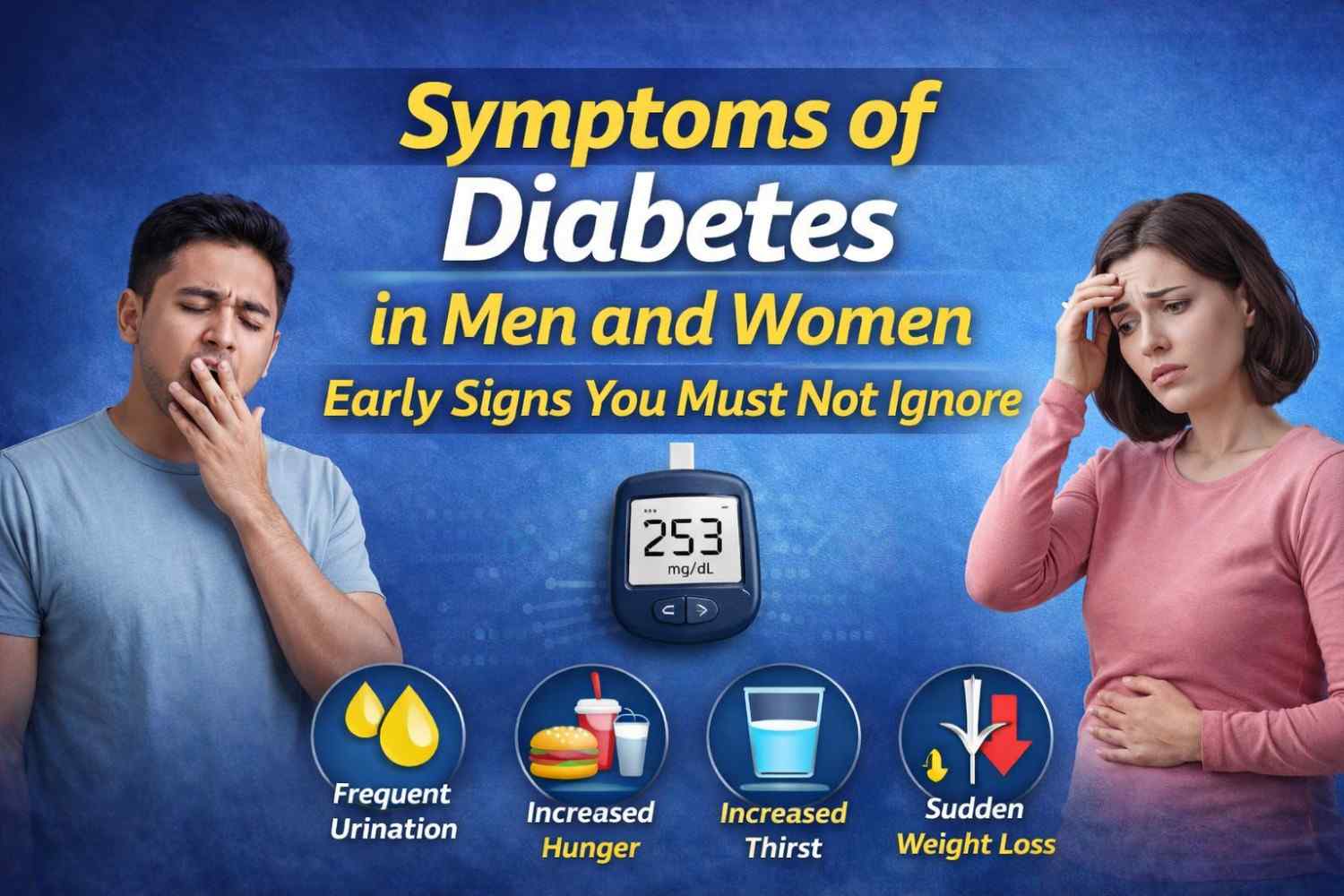
Diabetes often develops quietly. Many people don’t feel “seriously sick” at first, so the early warning signs get ignored or blamed on stress, age, weather, or a busy routine. The problem is that high blood sugar can start affecting your body long before a diagnosis happens.
This guide explains the common symptoms of diabetes in men and women, along with a few signs that are seen more often in one gender than the other. I’m keeping the language simple and practical, because most people searching this topic want quick clarity: “Is what I’m feeling normal, or should I get tested?”
Note: Symptoms can vary from person to person. Some people have many symptoms, while others have almost none.
What Diabetes Really Means (in simple words)
Diabetes happens when your body has trouble managing blood sugar (glucose). Either:
-
your body doesn’t make enough insulin, or
-
your body doesn’t use insulin properly.
When glucose stays high for long periods, it starts causing changes in your energy levels, thirst, urination, vision, skin, and healing process. That’s why diabetes symptoms often look unrelated at first.
Common Diabetes Symptoms in Both Men and Women
These signs can occur in anyone, regardless of gender. If you notice multiple symptoms together, it’s a strong reason to check your blood sugar.
1) Frequent urination (especially at night)
One of the most common early signs. When blood sugar is high, the kidneys try to remove extra sugar through urine. That means you may:
-
urinate more often than usual
-
wake up at night to use the bathroom
-
feel like your bladder is never fully “done”
2) Increased thirst
When you urinate more, your body loses fluid. That leads to constant thirst, even after drinking water. Many people notice:
-
dry mouth
-
craving cold water
-
feeling thirsty soon after drinking
3) Increased hunger
Even after eating, you may feel hungry again quickly. This happens because glucose isn’t entering your cells efficiently, so your body thinks it needs more fuel.
4) Unexplained weight loss
This is more common in uncontrolled diabetes. If your body can’t use glucose properly, it starts breaking down fat and muscle for energy. Weight loss without trying is a red flag—especially if hunger is increased.
5) Tiredness and low energy
High blood sugar can make you feel:
-
unusually tired
-
sleepy after meals
-
weak even with enough sleep
Many people describe it as a “heavy body” feeling or mental fatigue.
6) Blurred vision
High glucose affects fluid balance in your eyes, which can cause:
-
blurry vision that comes and goes
-
trouble focusing on text
-
temporary vision changes
If blurry vision happens repeatedly, it’s worth checking sugar levels.
7) Slow healing wounds
Cuts, bruises, or small injuries may take longer to heal. High sugar can affect blood flow and the immune system, slowing the repair process.
8) Frequent infections
When sugar is high, infections can become more common. You may notice:
-
skin infections
-
gum issues
-
repeated urinary infections
-
fungal infections
If infections keep coming back, don’t ignore it.
9) Tingling or numbness in hands and feet
Over time, high sugar can affect nerves. Some people feel:
-
pins and needles
-
numbness in toes
-
burning sensation in feet at night
This is a sign you should not delay.
10) Dark patches on skin (especially neck/armpits)
Some people develop darker, thicker patches of skin, especially around:
-
neck folds
-
armpits
-
groin area
This can be linked with insulin resistance.
Symptoms of Diabetes in Men
Men can experience the common symptoms above, but a few issues are reported more often in men and can be overlooked because people hesitate to discuss them.
1) Erectile dysfunction (ED)
High blood sugar can affect blood vessels and nerves, which may contribute to erectile problems. If ED appears alongside thirst, fatigue, or frequent urination, diabetes screening is worth considering.
2) Reduced stamina and energy
Many men describe it as:
-
reduced strength
-
low motivation
-
tiredness even with normal activity
While these can have many causes, diabetes can be one of them—especially if combined with other signs.
3) Frequent urination impacting routine
Men often notice the disruption more clearly, especially if:
-
they wake up multiple times at night
-
they feel urgency during travel or work
4) More frequent skin infections
Some men may get:
-
itching in private areas
-
fungal infections
-
boils or skin irritation that returns repeatedly
Symptoms of Diabetes in Women
Women may also have the common symptoms, but certain signs are more common in women due to hormonal and anatomical factors.
1) Frequent urinary tract infections (UTIs)
High sugar can support bacterial growth. Women may experience:
-
burning during urination
-
frequent urge to urinate
-
lower abdominal discomfort
-
UTIs that return again and again
2) Yeast infections
Recurring yeast infections can be a major clue. Symptoms may include:
-
itching
-
irritation
-
unusual discharge
-
discomfort
If infections repeat, sugar testing should be considered.
3) Irregular periods or hormonal changes
Diabetes and insulin resistance can sometimes affect hormones. Some women notice:
-
irregular cycles
-
changes in flow
-
worsening of PCOS symptoms
This doesn’t always mean diabetes, but it can be connected in some cases.
4) Increased fatigue and mood changes
Women often report:
-
constant tiredness
-
brain fog
-
irritability
-
difficulty concentrating
Because these symptoms overlap with stress and anemia, diabetes can be missed unless tested.
Prediabetes: Warning Signs Before Diabetes
Prediabetes means blood sugar is higher than normal but not high enough for a diabetes diagnosis. Many people have no symptoms, but some clues include:
-
mild fatigue after meals
-
slight weight gain around the belly
-
increased cravings for sweet foods
-
dark skin patches (neck/armpits)
-
slowly increasing urination and thirst
Prediabetes is important because lifestyle changes at this stage can often prevent diabetes or delay it.
When Should You Get Tested?
Consider testing if:
-
you have two or more symptoms together
-
diabetes runs in your family
-
you are overweight or have belly fat
-
you have high BP, cholesterol issues, or PCOS
-
you feel tired all the time without a clear reason
Common tests your doctor may suggest:
-
Fasting blood sugar
-
HbA1c (average sugar over 2–3 months)
-
Post-meal blood sugar
Testing is the only way to confirm. Symptoms alone can’t diagnose diabetes.
A Simple Self-Check Checklist
If you answer “yes” to several, take it seriously:
-
I urinate more often than before
-
I feel thirsty frequently
-
I feel hungry even after meals
-
I feel unusually tired most days
-
My vision gets blurry sometimes
-
My wounds heal slowly
-
I get repeated infections (skin/UTI/yeast)
-
I feel tingling in feet or hands
-
I’ve lost weight without trying
Takeaway
The symptoms of diabetes in men and women often start small, but they tend to come in patterns—thirst with frequent urination, fatigue with hunger, infections with slow healing. The earlier you catch diabetes, the easier it is to manage and reduce long-term complications.
If you suspect diabetes, don’t wait for symptoms to “get worse.” A simple test can bring clarity and help you take control early.
Disclaimer
This article is for general educational purposes only and does not provide medical advice, diagnosis, or treatment. Symptoms can have many causes, and only a qualified healthcare professional can confirm diabetes through proper tests. If you have concerns or symptoms, please consult a doctor or certified medical professional.