A heart attack rarely comes without warning. In many cases, the body starts giving subtle signals days, weeks, or even months before a major cardiac event happens. The problem is that most people either ignore these early signs or mistake them for simple issues like gas, acidity, or stress.
Heart disease is one of the leading causes of death worldwide, and India is no exception. What makes it more dangerous is that heart attacks are now affecting younger people too. Understanding the early signs of a heart attack can save your life or the life of someone you love.
This guide explains the common early symptoms, how they feel, who is at risk, and what to do if you notice warning signs.
What Happens During a Heart Attack?
A heart attack occurs when blood flow to a part of the heart muscle is suddenly blocked. This usually happens because of a buildup of fat, cholesterol, and other substances inside the arteries. When oxygen-rich blood cannot reach the heart muscle, the tissue begins to get damaged.
The sooner treatment starts, the better the chances of survival and recovery.
Why Recognizing Early Signs Matters
Many people think a heart attack always feels like sudden, severe chest pain. While this can happen, it is not always the case. Some heart attacks begin slowly with mild discomfort. Others show unusual symptoms that don’t seem related to the heart at all.
Recognizing early signs gives you a chance to seek medical help before major damage occurs.
Common Early Signs of Heart Attack
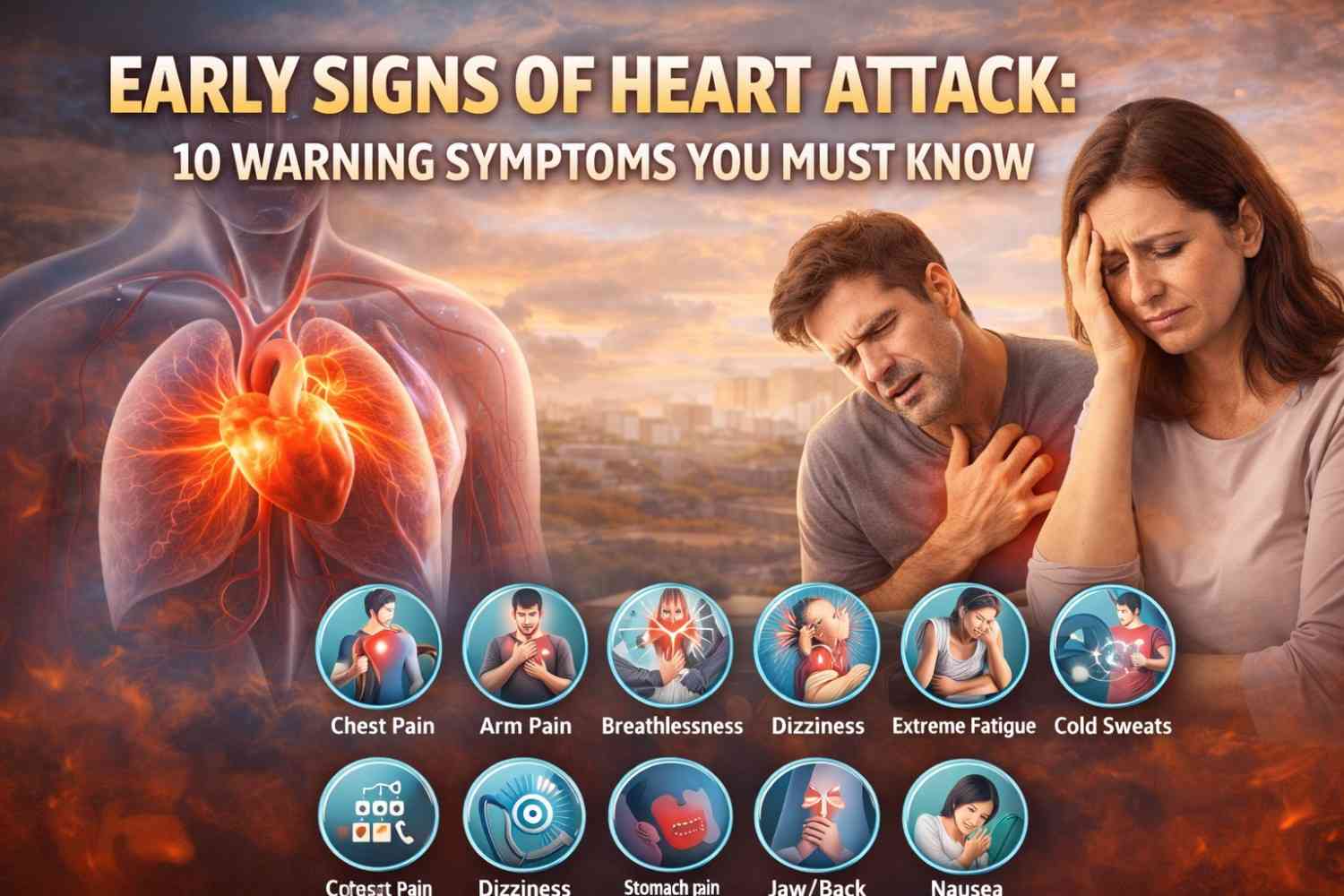
1. Chest Discomfort or Pressure
This is the most well-known symptom. It may feel like:
-
Pressure or tightness
-
A squeezing sensation
-
Burning or heaviness
The discomfort may last for a few minutes or come and go. It is not always sharp pain. Some people describe it as an uncomfortable weight on the chest.
2. Pain Spreading to Other Areas
Heart-related pain does not always stay in the chest. It can spread to:
-
Left arm or both arms
-
Neck
-
Jaw
-
Shoulder
-
Upper back
This spreading pain is a strong warning sign and should never be ignored.
3. Shortness of Breath
Feeling breathless without heavy activity can be an early sign. You may feel like you cannot take a deep breath or that your chest feels tight.
Shortness of breath may occur with or without chest discomfort.
4. Unusual Fatigue
Extreme tiredness that appears suddenly or lasts for several days can be a warning sign, especially in women. You may feel exhausted even after light activity or normal daily tasks.
This type of fatigue feels different from regular tiredness and often has no clear reason.
5. Dizziness or Lightheadedness
Feeling faint, dizzy, or unsteady can indicate that the heart is not pumping enough blood to the brain. This symptom may occur along with sweating or nausea.
6. Nausea, Indigestion, or Stomach Pain
Some people experience stomach discomfort, acidity, or a feeling of fullness before a heart attack. This is more common in women and older adults.
Because these symptoms resemble digestive problems, many people ignore them.
7. Cold Sweats
Breaking out into a cold sweat without physical exertion can be a serious warning sign. The sweat may feel clammy and sudden.
8. Irregular or Rapid Heartbeat
A feeling that your heart is racing, fluttering, or beating unevenly can be an early sign. Occasional palpitations can be normal, but frequent or sudden changes should be checked.
9. Anxiety or Sense of Doom
Some people report an unexplained feeling of anxiety, restlessness, or a sense that something is seriously wrong before a heart attack.
10. Sleep Disturbances
Difficulty sleeping, waking up breathless, or feeling unusually tired in the morning can sometimes appear weeks before a heart attack.
Early Signs in Men vs Women
While many symptoms overlap, women are more likely to experience:
-
Extreme fatigue
-
Nausea or vomiting
-
Jaw, neck, or back pain
-
Shortness of breath without chest pain
Men more commonly experience classic chest pain and left arm pain, but they can also have atypical symptoms.
Who Is at Higher Risk?
You may be at greater risk of heart attack if you:
-
Have high blood pressure
-
Have diabetes
-
Smoke or use tobacco
-
Are overweight or obese
-
Have high cholesterol
-
Have a family history of heart disease
-
Live a sedentary lifestyle
-
Experience chronic stress
Young adults with poor lifestyle habits are also increasingly at risk.
What To Do If You Notice Warning Signs
-
Do not ignore symptoms, even if they seem mild
-
Seek medical help immediately
-
Call emergency services or go to the nearest hospital
-
Do not drive yourself if possible
-
Loosen tight clothing and sit or lie down
Quick action can save your life.
How to Reduce Your Risk of Heart Attack
1. Eat a Heart-Healthy Diet
Include:
-
Fruits and vegetables
-
Whole grains
-
Nuts and seeds
-
Lean protein
Limit:
-
Fried foods
-
Sugary drinks
-
Processed snacks
-
Excess salt
2. Stay Physically Active
Aim for at least 30 minutes of moderate activity most days of the week. Walking, cycling, or yoga are good options.
3. Quit Smoking
Smoking damages blood vessels and increases the risk of clots. Quitting greatly reduces heart attack risk.
4. Manage Stress
Practice relaxation techniques like deep breathing, meditation, or light exercise.
5. Regular Health Checkups
Monitor blood pressure, sugar levels, and cholesterol regularly.
When to See a Doctor
Consult a healthcare professional if you:
-
Have persistent chest discomfort
-
Experience frequent shortness of breath
-
Feel extreme fatigue without reason
-
Have multiple risk factors
Early evaluation can prevent serious problems.
Final Thoughts
Heart attacks often give warning signs before striking. Listening to your body and acting quickly can make a life-saving difference. Never ignore unusual symptoms or assume they will go away on their own.
By understanding the early signs of a heart attack and adopting healthier habits, you can protect your heart and improve your chances of a long, healthy life.
Disclaimer: This content is for informational purposes only and should not be considered medical advice. Always consult a qualified healthcare professional for diagnosis and treatment.