
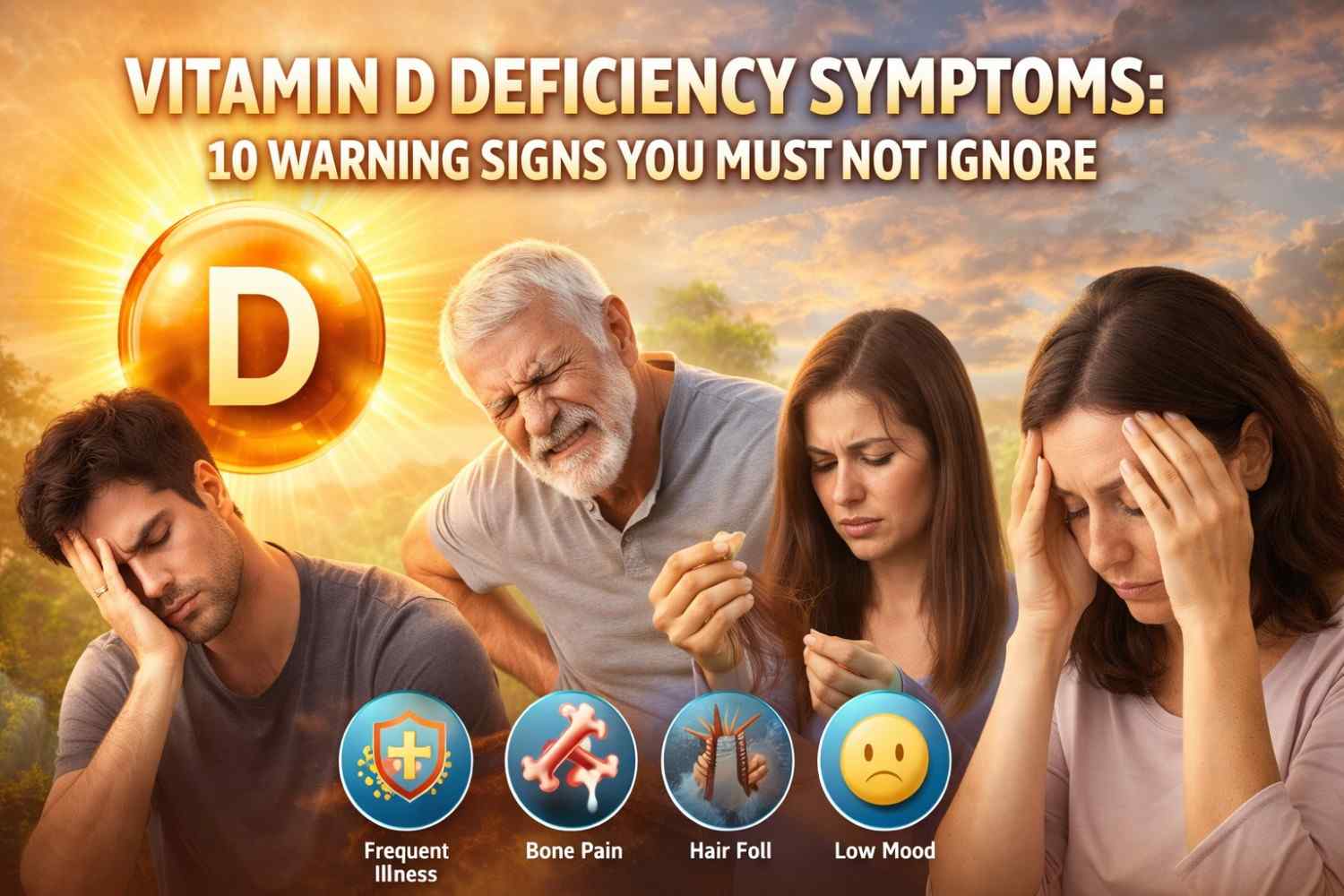
Vitamin D is often called the “sunshine vitamin,” but its importance goes far beyond just sunlight exposure. It plays a vital role in keeping our bones strong, supporting the immune system, and maintaining overall health. Unfortunately, Vitamin D deficiency has become very common, especially among people who spend most of their time indoors, live in polluted cities, or have limited sun exposure.
Many people live with low Vitamin D levels without realizing it. The symptoms can be subtle at first and may slowly worsen over time. Understanding these signs early can help you take timely action and avoid long-term health problems.
This guide explains the most common Vitamin D deficiency symptoms, who is at risk, why it happens, and what you can do to improve your levels naturally.
What Is Vitamin D and Why Is It Important?
Vitamin D helps the body absorb calcium and phosphorus—two minerals essential for strong bones and teeth. It also plays a role in:
-
Supporting immune function
-
Regulating mood and mental health
-
Maintaining muscle strength
-
Reducing inflammation
Unlike many other vitamins, your body can produce Vitamin D when your skin is exposed to sunlight. You can also get it from certain foods and supplements.
When Vitamin D levels drop too low, the body starts to show warning signs.
Common Vitamin D Deficiency Symptoms
1. Frequent Illness or Infections
If you often catch colds, flu, or other infections, low Vitamin D may be one of the reasons. Vitamin D supports the immune system by helping immune cells fight bacteria and viruses. A deficiency can weaken this defense, making you fall sick more easily.
2. Constant Fatigue and Low Energy
Feeling tired even after getting enough sleep is a common complaint among people with Vitamin D deficiency. You may notice low energy levels, lack of motivation, or general weakness throughout the day.
This type of fatigue is often overlooked or blamed on stress, but low Vitamin D can be a hidden cause.
3. Bone and Lower Back Pain
Vitamin D helps your body absorb calcium. Without enough Vitamin D, bones can become thin and weak. This often leads to:
-
Dull aches in bones
-
Lower back pain
-
Joint discomfort
In severe cases, it can increase the risk of fractures.
4. Muscle Pain and Weakness
Muscle cramps, stiffness, or unexplained muscle pain can be a sign of low Vitamin D. Some people notice difficulty climbing stairs, standing up from a chair, or lifting objects.
Muscle weakness related to Vitamin D deficiency is especially common in older adults.
5. Hair Fall
Excessive hair shedding or thinning hair may be linked to low Vitamin D levels. While hair fall has many possible causes, Vitamin D plays a role in hair follicle health. Deficiency may slow hair growth and weaken roots.
6. Mood Changes and Depression
Vitamin D is involved in regulating mood and brain function. Low levels have been associated with:
-
Feeling sad or low
-
Irritability
-
Lack of interest in activities
Some studies suggest that Vitamin D deficiency may increase the risk of depression, especially during winter months when sunlight exposure is limited.
7. Slow Wound Healing
If cuts, burns, or injuries take longer than usual to heal, low Vitamin D could be a factor. Vitamin D supports the production of compounds needed for skin repair and infection control.
8. Bone Loss or Osteoporosis
Long-term Vitamin D deficiency can lead to decreased bone density. In adults, this may result in osteopenia or osteoporosis, conditions that make bones fragile and more likely to break.
9. Sweating More Than Usual
Excessive sweating, especially around the head and face, has been linked to Vitamin D deficiency. Although sweating can have many causes, persistent and unexplained sweating should not be ignored.
10. Weight Gain
Some research suggests a link between low Vitamin D levels and weight gain. Vitamin D may play a role in regulating fat storage and metabolism. While it is not the sole cause of weight changes, deficiency may make weight management more difficult.
Who Is at Higher Risk of Vitamin D Deficiency?
You may be more likely to develop Vitamin D deficiency if you:
-
Spend most of your time indoors
-
Use strong sunscreen constantly
-
Live in areas with high pollution
-
Have darker skin tone
-
Are overweight or obese
-
Are over 60 years old
-
Follow a strict vegetarian or vegan diet
Causes of Vitamin D Deficiency
-
Limited sunlight exposure
-
Poor dietary intake
-
Digestive disorders affecting absorption
-
Kidney or liver problems
-
Certain medications
How to Know If You Have Vitamin D Deficiency
The most accurate way to check your Vitamin D level is through a blood test called 25-hydroxy Vitamin D test. Your doctor can advise you on testing and appropriate treatment based on results.
Natural Ways to Increase Vitamin D Levels
1. Get Safe Sunlight Exposure
Spend 15–30 minutes in sunlight between 10 AM and 3 PM, at least 3–4 times a week. Expose arms, face, or legs if possible.
2. Eat Vitamin D-Rich Foods
Include foods such as:
-
Fatty fish (salmon, sardines, tuna)
-
Egg yolk
-
Fortified milk and cereals
-
Mushrooms exposed to sunlight
3. Consider Supplements
If diet and sunlight are not enough, supplements may be recommended by a healthcare professional. Avoid self-medicating with high doses.
4. Maintain a Healthy Lifestyle
Regular exercise, balanced nutrition, and maintaining a healthy weight can support better Vitamin D absorption.
Can Vitamin D Deficiency Be Prevented?
Yes. Simple habits like regular sun exposure, balanced diet, and periodic health check-ups can help prevent deficiency. Early detection and timely correction are key.
When to See a Doctor
Consult a healthcare professional if you:
-
Have persistent bone or muscle pain
-
Feel extreme fatigue
-
Experience frequent infections
-
Have risk factors for deficiency
Final Thoughts
Vitamin D deficiency is more common than many people realize, and its symptoms can quietly affect daily life. Paying attention to early warning signs and taking small, consistent steps can make a big difference in your health.
By understanding Vitamin D deficiency symptoms and adopting healthier habits, you can protect your bones, boost immunity, and improve overall well-being.
Disclaimer: This content is for informational purposes only and should not replace professional medical advice. Always consult a qualified healthcare provider before starting any supplement or treatment.